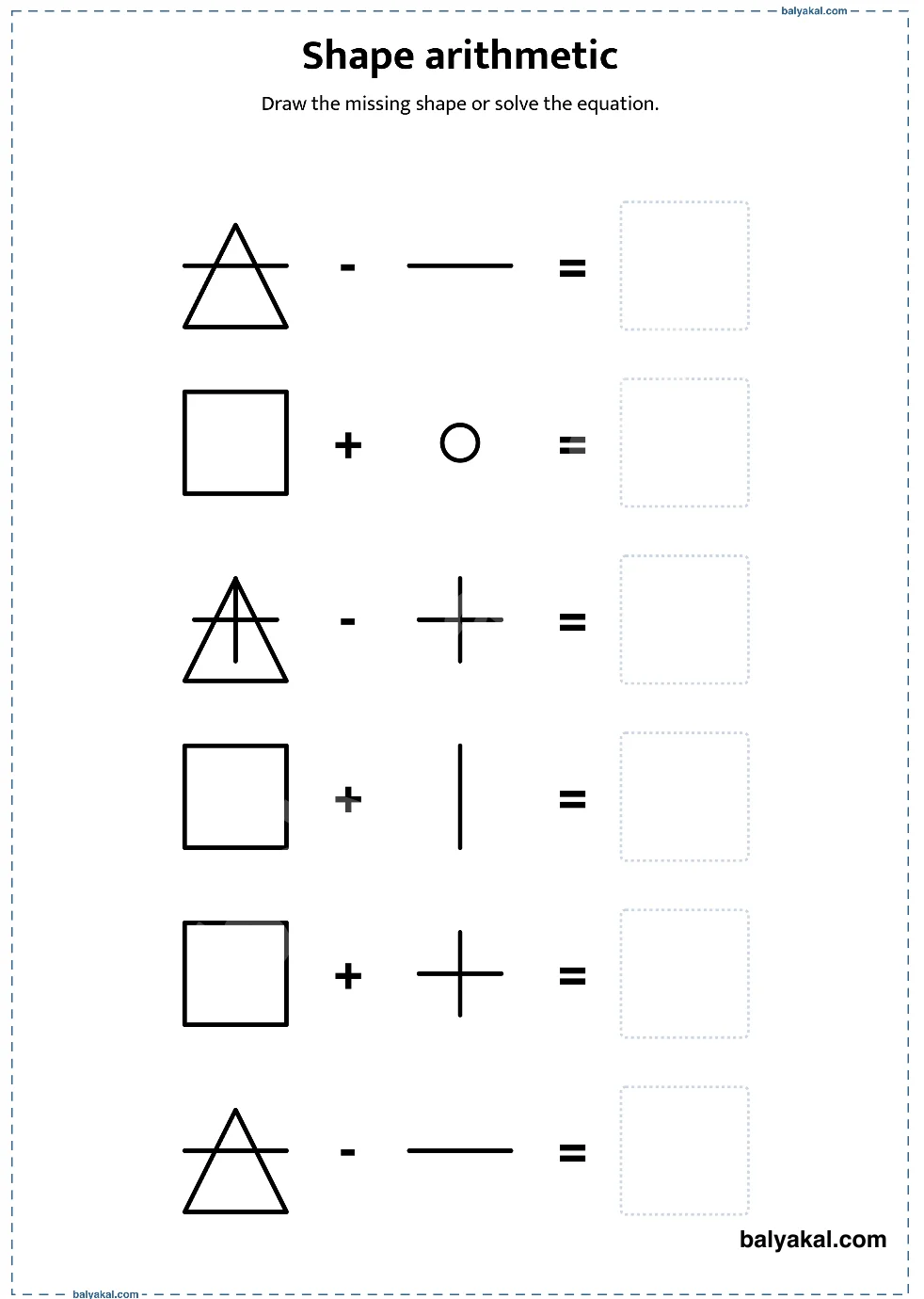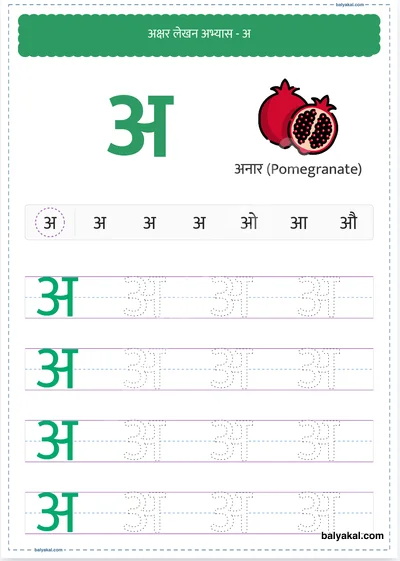
Tracing & Pen Control
Build essential pencil control and fine motor skills with progressive tracing exercises, perfectly preparing them for writing letters.
Before a child can comfortably and legibly write the alphabet or draw precise pictures, they must first develop small finger muscle control, steady hand movement, and grip stability. This is not an overnight process; it requires repetitive, structured practice. Our Tracing & Pen Control section provides a meticulously designed series of progressive tracing exercises deeply inspired by proven Montessori early learning methods.
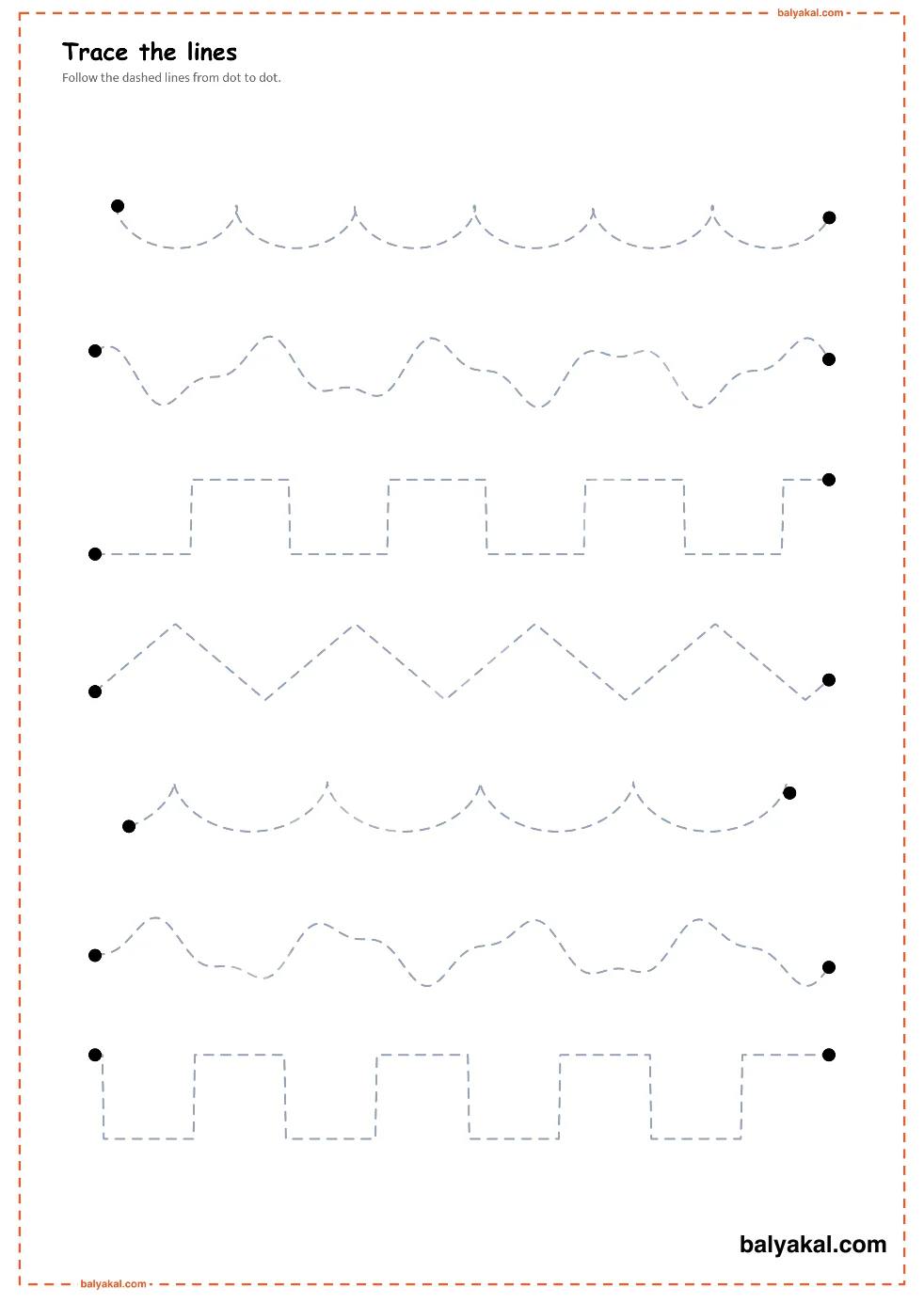
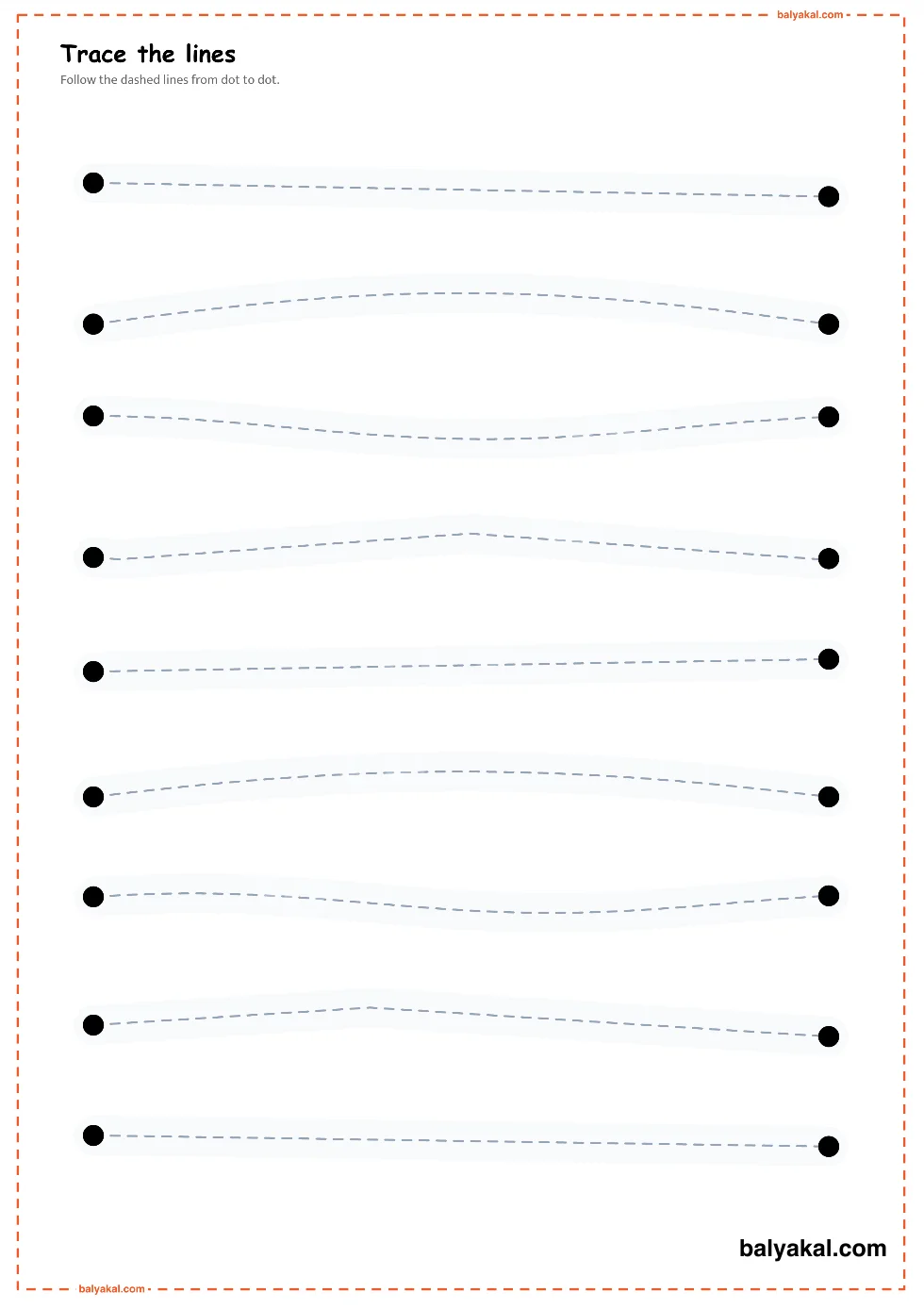
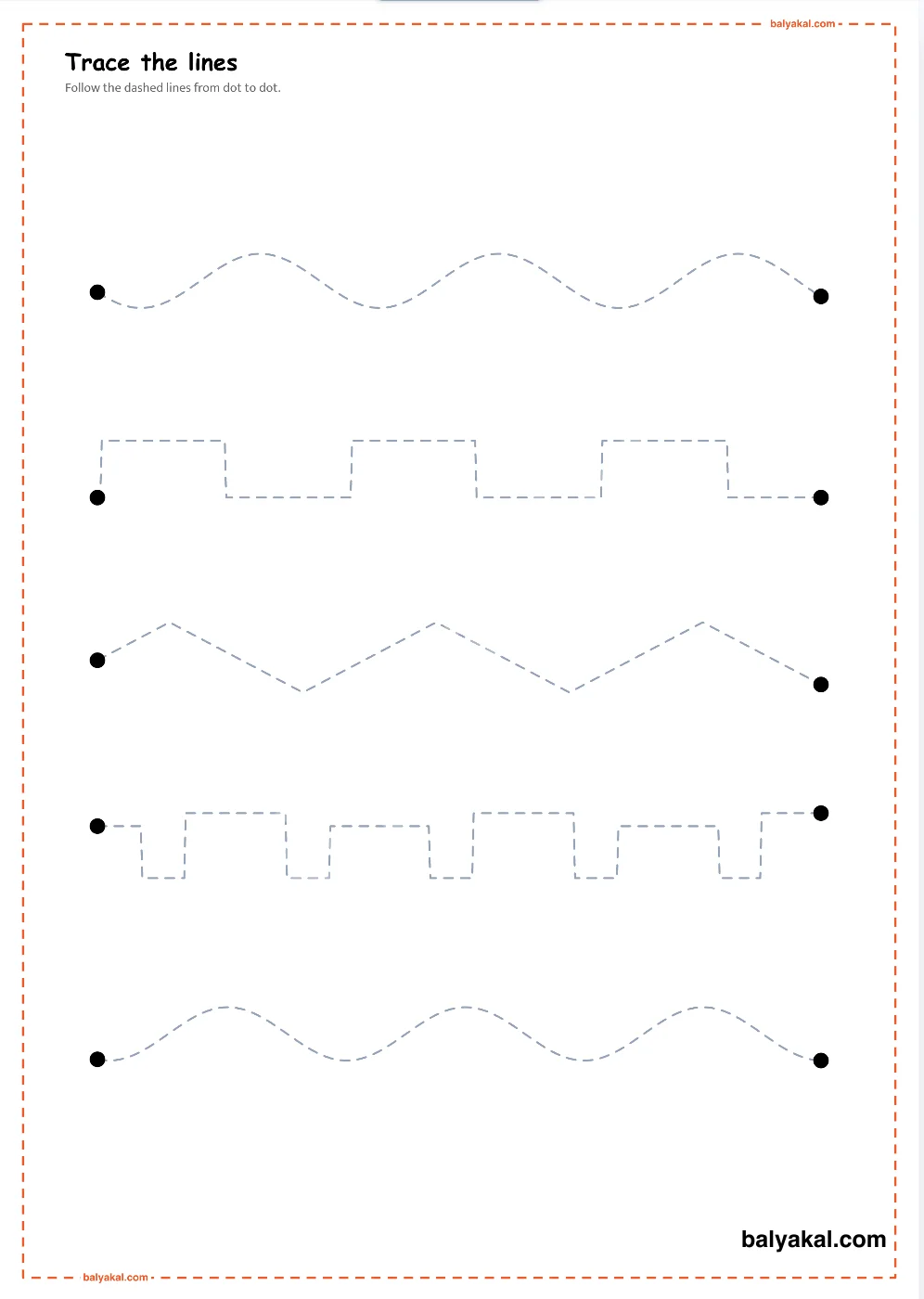
Holding a pencil correctly (the tripod grasp) requires significant dexterity and strength in the fingers. When a child traces a path, they are learning how to apply consistent pressure to the paper, how to stop their hand exactly when their eyes tell them to (hand-eye coordination), and how to cross the midline of their body. Our Line and Curve Tracing generator is specifically built to guide children through these developmental stages. You can instantly create high-resolution worksheets featuring everything from simple, short straight lines for beginners, to complex, sweeping loops, ocean waves, and sharp zigzag mountain patterns for advanced preschoolers.
Progressive Skill Building & Customization
- Line & Curve Dynamics: Worksheets like Line and Curve Tracing allow you to adjust the exact layout, difficulty, and row spacing. Giving young kids extra "breathing space" between rows prevents visual clutter and reduces frustration, while tighter spacing offers a greater challenge for older kids.
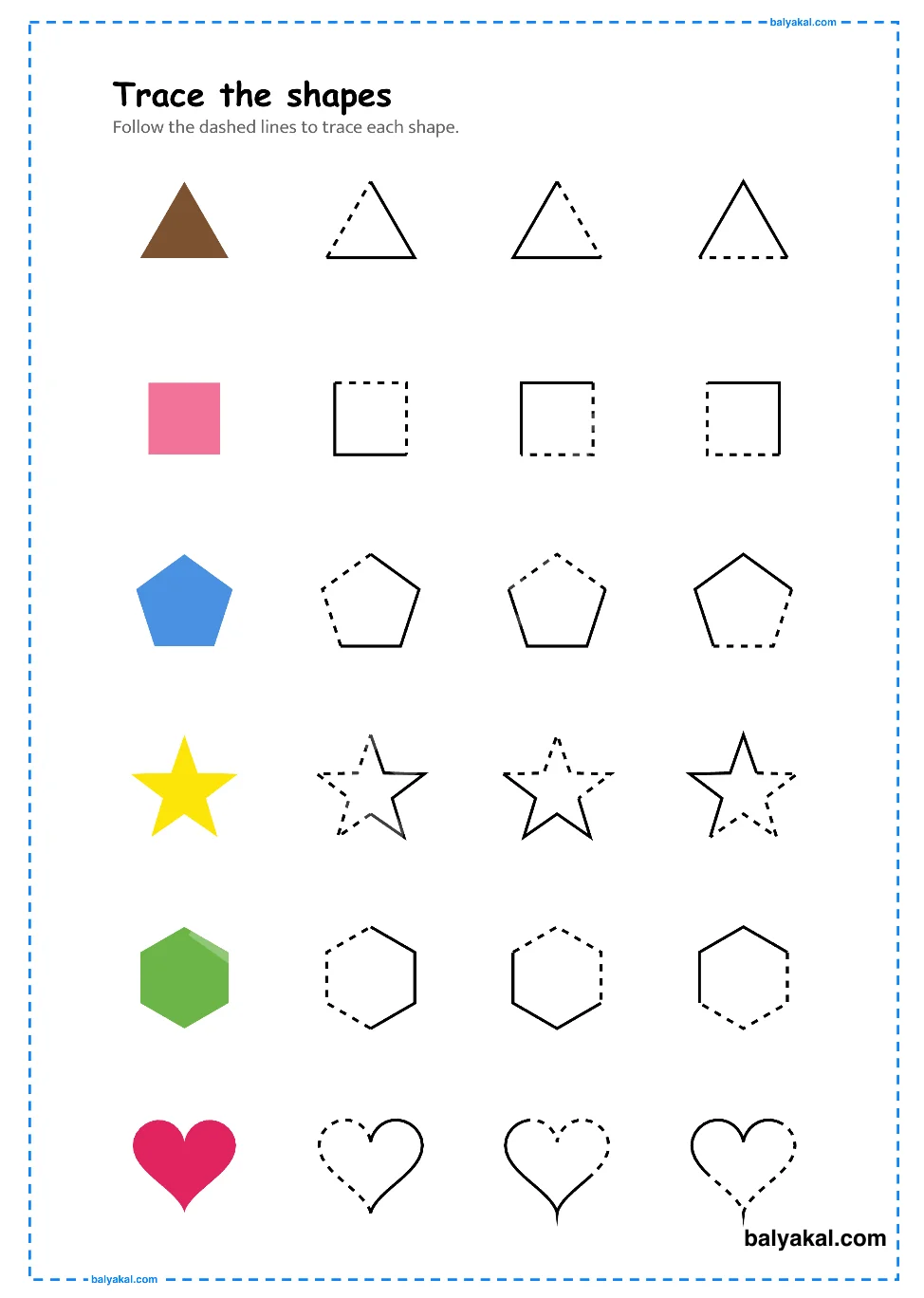
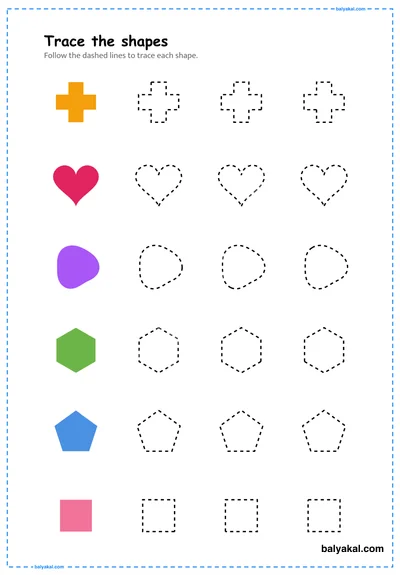
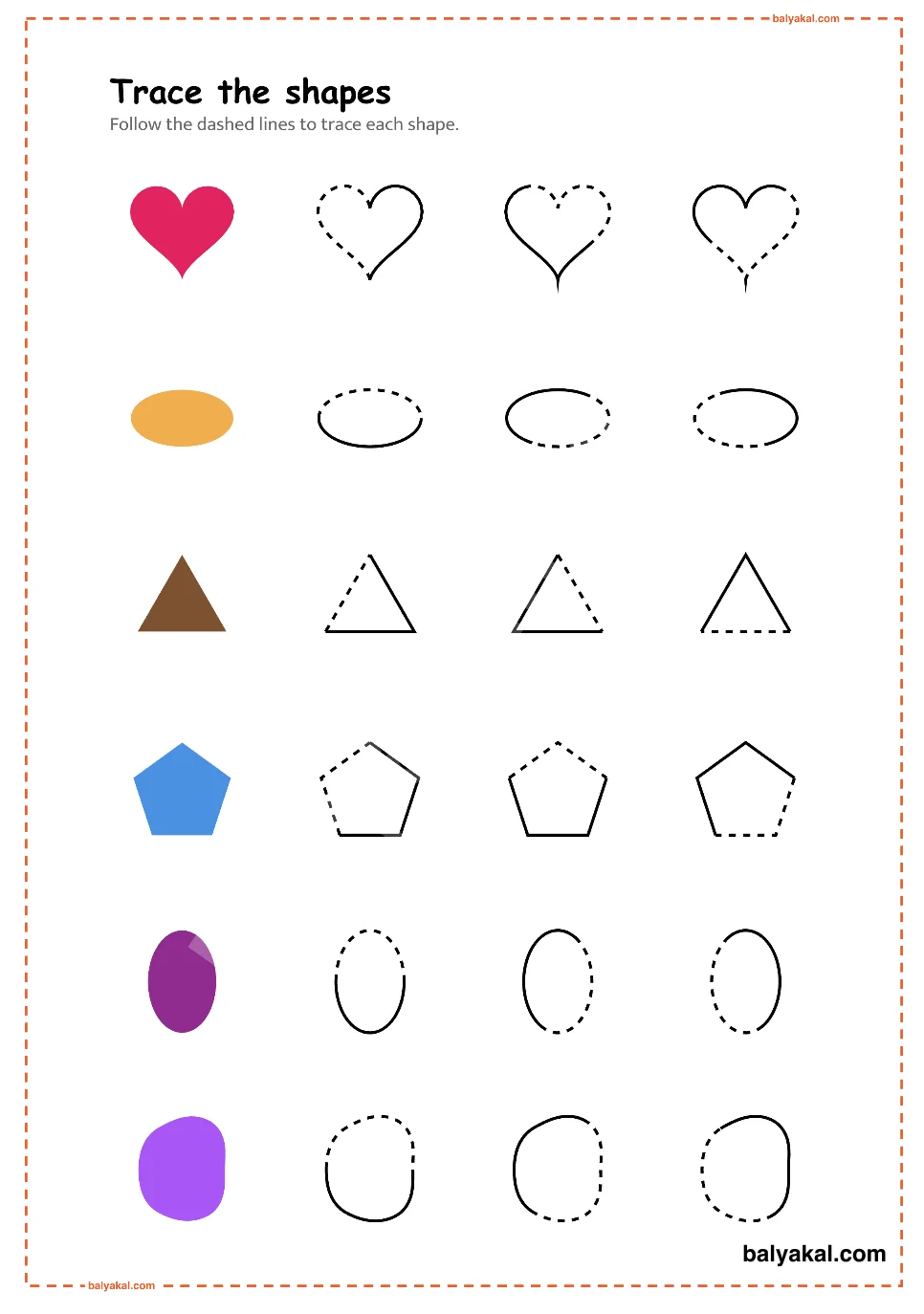
- Forming Closed Geometric Shapes: The Shape Tracing Practice tool introduces closed paths. Tracing polygons, stars, and organic blobs helps children learn how individual line segments seamlessly connect to form complete shapes, a critical step before attempting to write circular letters like 'O', 'C', or 'G'.
- Adjustable Opacity for Scaffolding: A standout feature of our tracing generators is the ability to adjust the tracing line opacity and the density of the helper dots. You can start with a 50% solid traced helper line for a 3-year-old, and gradually fade it to widely spaced dots as the child's muscle memory takes over.
- Vector Quality Printables: Because fine motor practice requires precision, our tools generate crisp, clean, high-resolution vector paths. There are no blurry internet screenshots here—just pristine, professionally formatted worksheets designed explicitly for clear A4 printing.
Regular tracing practice helps toddlers naturally build pencil control and writing endurance. By turning early handwriting practice into an easy, customizable, and stress-free experience, you empower children to express themselves confidently on paper.