Grow Strong on Local Harvest: Nepal’s 12-Month Food Calendar for Kids
Editorial Integrity & Science-Backed Review
Written by the Balyakal Editor, this guide is based entirely on published early childhood development research, without personal opinions. Every tip and fact comes directly from scientific studies, simplified to help you easily use these strategies.
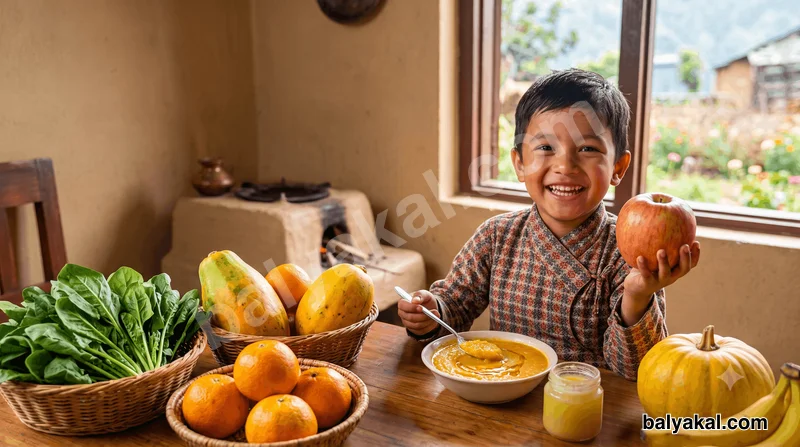
Feeding your children nutritious food doesn't mean relying on expensive, imported fruit from distant countries. Even if a fruit isn't grown in your immediate city—like apples transported fresh from Jumla or Mustang to markets across Nepal—buying produce grown within Nepal gives your child far better nutritional value than fruits shipped from overseas.
Why Locally Grown Nepali Produce is Better Absorbed by the Body
When we compare home-grown or locally harvested produce to long-haul foreign imports, research in food biochemistry reveals a clear advantage in bioaccessibility—how easily your child's digestive system breaks down and absorbs active nutrients:
- Higher Plant-Matrix Breakdown: Foreign fruits are picked green so they don't spoil on long boat trips. Produce grown in Nepal (whether in your backyard or transported from Jumla, Terai, or Mustang) stays on the tree longer to mature naturally. Natural tree-ripening activates enzymes that break down tough cell walls, allowing a child's gut enzymes to unlock and absorb internal vitamins far more easily.
- Preserved Vitamin Integrity: Essential micronutrients like Vitamin C (ascorbic acid) oxidize rapidly when exposed to heat, light, and extended storage times. Studies on post-harvest transport show that imported produce can lose 20% to over 50% of its active Vitamin C during multi-week shipping. Local produce delivers active, intact vitamins rather than degraded chemical byproducts.
- No Synthetic Wax Barriers: Imported fruits are heavily coated with synthetic waxes, fungicides, and anti-transpirants to survive weeks in shipping containers. These hydrophobic waxes partially resist stomach acid and slow down nutrient release during digestion. Local crops require no heavy chemical preservation.
- Natural Acid-Sugar Balance for Co-Transport: Tree-ripened local fruits retain natural organic acids (citric and malic acid) and simple sugars. These organic acids act as natural chelating agents in the gut, binding with critical minerals like iron and zinc so they cross the intestinal wall into the bloodstream efficiently.
The 12-Month Nepali Harvest Guide
This calendar includes both backyard garden produce and regional crops transported across Nepal (such as mountain apples, Terai citrus, and valley vegetables) so you can easily find them in your local market.
- 1. Baishakh (Mid-April – Mid-May)
- Fruits: Strawberry, Watermelon (Tarbuja), Mulberry (Tuta), Loquat (Lakat).
- Vegetables: Cucumber (Kankro), Okra (Bhindi), Pumpkin (Farsi), Bottle Gourd (Lauka).
- Benefits for Kids: High water content keeps children hydrated during early summer and stays gentle on young stomachs.
- 2. Jestha (Mid-May – Mid-June)
- Fruits: Terai Mango (Aamp), Litchi (Litchi), Pineapple (Bhuikatar).
- Vegetables: Sponge Gourd (Ghiraula), Pointed Gourd (Parwar).
- Benefits for Kids: Full of Vitamin A (especially ripe mangoes) for healthy eyesight and strong immunity.
- 3. Asar (Mid-June – Mid-July)
- Fruits: Jackfruit (Rukh Kathal), Jamun (Jamun), Peach (Aaru), Plum (Aalubakhada).
- Vegetables: Taro Root (Pindalu), Wild Fiddlehead Fern (Niguro), Cowpea (Bodi).
- Benefits for Kids: Boosts energy during the monsoon season with lots of fiber, iron, and zinc for growth.
- 4. Shrawan (Mid-July – Mid-August)
- Fruits: Pear (Naspati), Local Guava (Amba / Peru).
- Vegetables: Sweet Corn (Makai), Snake Gourd (Chichinda), Taro Leaves (Karkalo).
- Benefits for Kids: Sweet corn gives active kids steady energy, while fresh pears support healthy digestion.
- 5. Bhadra (Mid-August – Mid-September)
- Fruits: Jumla & Mustang Apples (Syau), Pomelo (Bhogate), Local Dragonfruit.
- Vegetables: French Beans (Simi), Yard-long Beans (Tane Bodi).
- Benefits for Kids: Mountain apples transported from Jumla contain natural pectin fiber that feeds good gut bacteria and prevents childhood constipation.
- 6. Ashwin (Mid-September – Mid-October)
- Fruits: Pomegranate (Anar), Persimmon (Haluwabeda).
- Vegetables: Sweet Potato (Sakarkhanda), Radish (Mula), Cauliflower (Kauli).
- Benefits for Kids: Sweet potatoes give slow-burning, complex carbohydrates to keep active kids energized.
- 7. Kartik (Mid-October – Mid-November)
- Fruits: Suntala from Syangja/Gorkha (Suntala), Junar from Sindhuli (Junar), Amla (Amla).
- Vegetables: Cabbage (Banda), Green Peas (Matar), Spinach (Palunggo).
- Benefits for Kids: Packed with Vitamin C to strengthen immune systems before winter starts.
- 8. Mangsir (Mid-November – Mid-December)
- Fruits: Sweet Lime (Mausam).
- Vegetables: Mustard Greens (Rayo), Carrot (Gajar), Broad Beans (Bakulla).
- Benefits for Kids: Carrots support eye health, while Rayo greens provide natural iron for healthy blood.
- 9. Poush (Mid-December – Mid-January)
- Fruits: Terai Sugarcane (Ukhu).
- Vegetables: Beetroot, Broccoli, Garlic Shoots (Lasun Paat / Chhyapi).
- Benefits for Kids: Rich in calcium, potassium, and manganese to build strong bones.
- 10. Magh (Mid-January – Mid-February)
- Fruits: Jujube (Bair), Papaya (Mewa).
- Vegetables: New Potato (Naya Aalu), Fenugreek Leaves (Methi).
- Benefits for Kids: Papaya aids digestion, while leafy greens deliver essential Vitamin K.
- 11. Falgun (Mid-February – Mid-March)
- Fruits: Banana (Kera).
- Vegetables: Eggplant (Bhanta), Capsicum (Bhede Khursani).
- Benefits for Kids: Bananas are rich in potassium, supporting muscle function and brain development.
- 12. Chaitra (Mid-March – Mid-April)
- Fruits: Year-round Papaya and Banana, Early Watermelon.
- Vegetables: Tomato (Golbheda).
- Benefits for Kids: Water-dense spring produce keeps children hydrated as temperatures rise.
Big Health Benefits for Growing Kids
- Brain and Blood: Greens like Palunggo and Rayo give your child iron and folate for brain power and strong blood cells. (Tip: Squeeze a little fresh lemon juice on green veggies so the body absorbs twice as much iron!)
- Strong Bones: Vegetables like Kauli and broccoli provide calcium for bone development during growth spurts.
- Healthy Stomach: Local apples (Syau) and root veggies like Sakarkhanda keep the gut microbiome healthy and prevent constipation.
- Eyesight and Immunity: Orange vegetables like Gajar and Farsi are packed with beta-carotene for sharp vision and strong immune walls.
4 Easy Nepali Recipes for Kids
1. Farsi ko Jaulo (Pumpkin-Lentil Porridge)
- Best For: Babies (6+ months) to school kids.
- Ingredients: Yellow pumpkin (Farsi), yellow mung dal, rice, ghee, turmeric, cumin seeds.
- How to Make: Cook equal parts washed rice, mung dal, and chopped pumpkin in water with turmeric and a tiny bit of salt in a pressure cooker for 4 whistles. Fry cumin seeds in a little ghee and stir into the cooked mixture. Mash well before serving.
- Why It’s Good: Loaded with Vitamin A. The healthy fat in ghee helps your child's body absorb fat-soluble vitamins easily.
2. Palunggo ra Gajar ko Roti (Spinach & Carrot Rotis)
- Best For: Toddlers (12+ months) and older kids.
- Ingredients: Wheat flour (Aata), fresh spinach (Palunggo), grated carrot (Gajar), carom seeds (Jwano), ghee.
- How to Make: Boil spinach briefly and blend it into a smooth liquid. Mix wheat flour, spinach puree, grated carrot, a pinch of jwano (for digestion), and a spoon of ghee to make dough. Roll into small rotis and cook on a tawa with a little ghee.
- Why It’s Good: A fun green flatbread that hides healthy plant iron and fiber inside.
3. Sakarkhanda ra Kera ko Halwa (Sweet Potato & Banana Pudding)
- Best For: Babies (8+ months) to school kids.
- Ingredients: Boiled sweet potato (Sakarkhanda), ripe banana (Kera), milk, ghee, cardamom powder (Sukmel).
- How to Make: Mash the boiled sweet potato and banana together. Heat ghee in a pan, add the mash, and cook on low heat for 3 minutes. Add warm milk and a pinch of cardamom, stirring until thick and smooth.
- Why It’s Good: Sweet and creamy with zero refined sugar. Great for natural energy.
4. Lauka ra Moong Dal ko Khichdi (Bottle Gourd Stew)
- Best For: Babies (6+ months) to school kids.
- Ingredients: Bottle gourd (Lauka), split yellow mung dal, rice, ghee, a pinch of hing (asafoetida).
- How to Make: Peel and chop the bottle gourd. Cook it in a pressure cooker with rice, mung dal, water, turmeric, and a tiny dash of hing. Stir in a spoon of fresh ghee before serving.
- Why It’s Good: Light, easy to digest, and very hydrating—perfect for hot days or when recovering from an upset stomach.
References
- Food and Agriculture Organization (FAO) / WHO: Guidelines on micronutrient requirements, dietary fiber benefits, and the role of lipids (ghee) in boosting fat-soluble vitamin absorption (Vitamin A, D, E, K) in pediatric nutrition.
- Journal of Agricultural and Food Chemistry: Research examining post-harvest nutrient degradation, loss of active ascorbic acid (Vitamin C), and decreased bioaccessibility in long-distance cold-stored exported fruits vs. tree-ripened local crops.
- Journal of Food Science and Technology (Nepal/South Asia): Studies on organic acid profiles, natural pectin softening, and mineral chelation efficiency in tree-ripened regional fruits compared to artificially ripened imports.
- Ministry of Agricultural Development, Nepal: Regional crop production calendars, supply chain logistics (Jumla apple, Terai citrus, Sindhuli Junar), and seasonal availability charts across Nepal's ecological belts.
- National Nutrition Policy and Strategy, Nepal: Guidelines on infant and young child feeding practices, food diversification, and iron-deficiency anemia prevention using locally available produce.
Explore Related Posts
Discover science-backed parenting tips, child development insights, and fun learning activities on Balyakal.